What Types of Solar Equipment Do You Need for Your Home?

Shifting to renewable energy sources is an appreciable lifestyle choice. And in this transition, Solar equipment suits perfectly.
The adaptable and modern designs of various solar instruments have turned them into a modern fad, prompting a production boom. Consequently, choosing the right type has never been more complicated.
If you are feeling the same, this short yet practical guide will inform you exactly what you need to know.
Why Switch to Solar Energy in Bangladesh?
Energy sources on Earth are depleting fast. The result is a boost in their price, natural imbalance, global warming, and a threat to human existence.
The hunt for alternative energy resources has never been higher in momentum. And in such conditions, ignoring the vast resource like sunlight is nothing but a regrettable waste.
Solar energy for homes in Bangladesh can be a lifesaver. Their installation is easier and they are more suitable for home or small places if compared to other sustainable energy sources like wind or water power plants. Moreover, using solar equipment is:
- Sustainable; have less environmental and health impact
- Cost saving; saves more money in the long run, against the upfront cost
- Safer; no use of acid-based batteries, and unsafe wiring
- Efficient; high portability contributes to multi-purpose usage
Key Solar Equipment You Need for a Home System
A home solar unit combines many complementary parts, where each has a definite responsibility. Here are the types of solar equipment essential for a complete setup:
Solar Panels
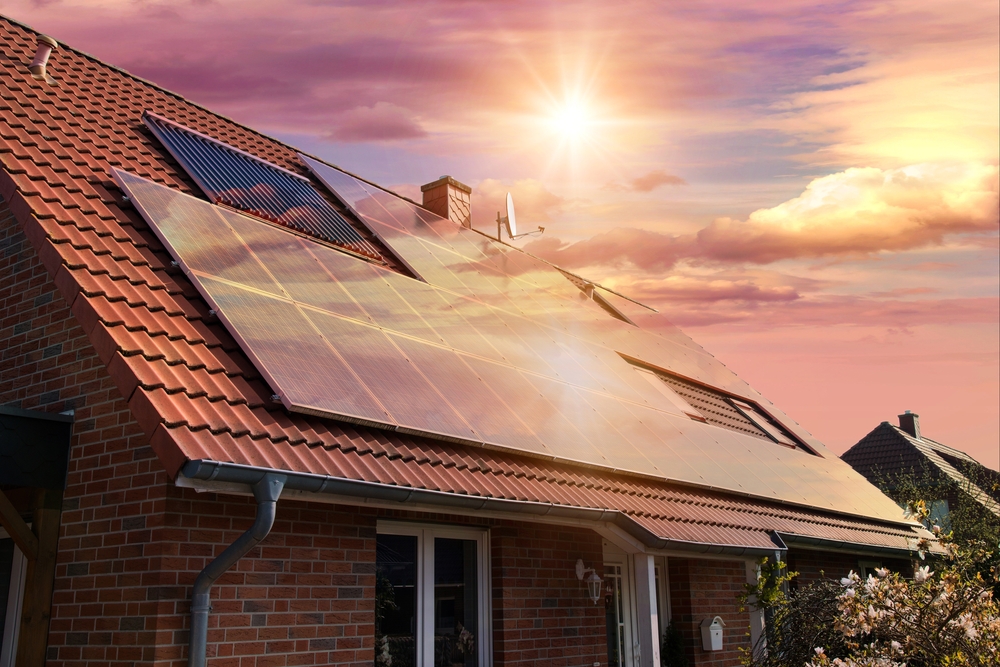
Solar panels come in rectangular or square shapes. They are made of hundreds of photo-reactive silicon sensors that capture sunbeams and convert them to electricity.
You place them horizontally on the rooftop or in a high and open space where sunlight falls directly. The number of panels and their efficiency will determine the output amount. They vary in types, production rate, weight, structure, and technologies.
Choosing the best solar panels for a home in Bangladesh depends on these factors:
Panel Types
Panels come in two major types: Monocrystalline (Mono) and Polycrystalline (Poly).
The first one is expensive due to its higher output rate and linear design. Whereas the second is a budget choice.
Durability and Build
Solar panel frames use water and heat-resistant materials. The quality of these materials and the precision in building are two must-check criteria to ensure a lasting buy.
Wattage Rating
You will find terms, like 350W, 500W, or 1000W, on the panel. These numbers show how much power a solar panel can generate in a standard situation.
Increasing the panel number will multiply the final production amount. Conversely, it takes fewer panels with higher wattage power to get a fixed power requirement.
Hybrid Solar Inverters & Charge Controllers
Hybrid solar systems for home and charge controllers are rather modern Solar applications. While regular inverters simply alter the stored current type, like from DC to AC, a hybrid inverter combines the functionalities of an inverter and a solar battery.
That means you can not only use stored solar energy, but also switch to the grid without manual control. It opens further scopes to integrate a solar system into an indoor power setup. Notable benefits of such integration include:
- Converting solar direct current (DC) to usable alternating current (AC)
- Effortlessly storing solar power in a battery
- If allowed, supplying unused solar power to the grid
- Switching between solar and grid systems, reading their availability
Charge controllers, on the other hand, monitor the current flow within a solar unit. For any disruption from the safe meter, it takes control, adjusts the flow, and reduces harmful effects. For example, excessive load and surge can damage the battery and also connected appliances.
IPS & UPS Systems for Backup Power
One of the most popular sun-powered equipment is Solar IPS. UPS backup systems have also stirred interest. Both these systems are the best ways to have an uninterrupted power supply. They get charged through the sun and provide a backup power supply once connected to the grid or a particular device.
Despite their similar functionalities, IPS and UPS differ in some aspects: purpose, application, duration of support, and response time. Here is a short table, highlighting these distinctions.
| Aspects/Features | Solar IPS | Solar UPS |
| Purpose | Designed for a vast setting with multiple devices, like lights, fans, and others | Designed for single-device use and usually unable to support multiple devices at once. |
| General Application | To run general home and office electronic appliances | To save sensitive electronic appliances, like a computer and a refrigerator, from damage due to power irregularities |
| Backup Duration | Long Term: Ideally, IPS can last hours with a single charge | Short Term: Can run a device for a few minutes to an hour |
| Switch Time | Fast: 2 to 10 seconds | Instant: 0 to 2 milliseconds |
Batteries for Solar Storage
Solar battery storage for homes allows for saving energy to use in an emergency. You can buy extra batteries and keep charging in a cycle while ensuring a constant solar power supply.
Many can subscribe to solar net metering in Bangladesh. It lets users feed extra solar electricity to the grid in exchange for money. Even so, batteries come in handy during outages.
You must note that solar batteries are of a unique type and differ from others by:
- Deep cycle capacity, offering repeated charging without losing performance
- Ability to store direct current, keeping a stable influx
- Longer life span, as direct current has a nominal impact on the battery health
- Lithium-ion cells, unlike the usual acid-based system
- Modern cells feature a smart monitoring system to track the storage status
Other Essential Solar Accessories
Until now, we have covered only the essential parts. But there are also a few accessories needed for a complete installation.
Mounting System
Whether on a roof, ground, or pole, a rightly mounted panel saves more space and captures more sunlight. Mounting hardware given with a panel varies depending on the mounting style of the panel.
Make sure that the mounting hardware is of good quality and capable of supporting the panels without wearing out or tearing apart anytime soon.
Cables and Connections
The cables connecting the panels to the battery or inverter should be made of anti-shock and anti-flame materials. Their plugs should have locking systems to prevent water access.
How to Choose the Right Solar Equipment for Your Home
When you are thinking of upgrading your home with an alternative power source, solar equipment is a timely consideration. But it’s easy to slip for first-time buyers who don’t know how to pick out the right equipment from all the available options.
Here are what to focus on:
How Much Coverage You Need
The number of devices that must be active during a power cut. Summing up their power consumption rate will give you a draft idea of how much backup support you need.
How to Select a Solar Panel
Apart from the Mono and Poly panel types, check a panel’s build precision and materials. Looking into their certifications and the manufacturer’s reputation is an unbeatable strategy to find an efficient solar panel.
How to Select an Inverter
There is a lot to check when making a decision on an inverter. Firstly, their types: traditional or hybrid. Secondly, the inverter should suck in the current delivered from the panels. Otherwise, it will create clipping. And finally, it should have high-speed connectivity: jacks and ports to receive and send current at a higher bandwidth.
Whether You Need a Battery
A battery is not always necessary. In the case of net metering, the use of a battery is often optional, as the extra current automatically goes into the grid. But if you want to buy one, learn what distinguishes common cell types: Lithium-ion, Lead-acid, and flow. Also, think about their capacities and lifespan.
How to Identify a Trusted Supplier
Consulting and buying from a trusted solar equipment supplier in Bangladesh is the best you can do when getting a solar unit. They will guide you through every step, from making you knowledgeable about solar systems, teaching you what matters and what does not, picking the right models, and installing them in your home.
How to Fix Your Budget
Budget is the clash between your power demand, the quality of equipment, the number of panels and batteries, and the installation style. Figuring out these factors will give you a practical idea of how much you should be paying your supplier.
FAQ
What size solar system do I need for my home in Bangladesh?
It will completely depend on your power and speed demand. If you want quick battery refills and higher wattage output, you are signing up for a large solar plant.
How much does solar equipment cost in Bangladesh?
The cost of solar equipment in Bangladesh ranges between BDT 15,000 to BDT 1,00,000.
Can I run my entire home on solar power?
Yes. With a powerful inverter and enough panel and battery support, it’s possible to run your home independent of grid usage.
What is the difference between IPS and UPS for solar systems?
A Solar IPS can cover multiple home appliances for many hours. On the contrary, a Solar UPS is used to power a single device for 30 to 60 minutes.
Do I need government approval for solar installation in Bangladesh?
Not usually. But to get a net metering convenience or grid integration, you must submit a request to the government.


